| |
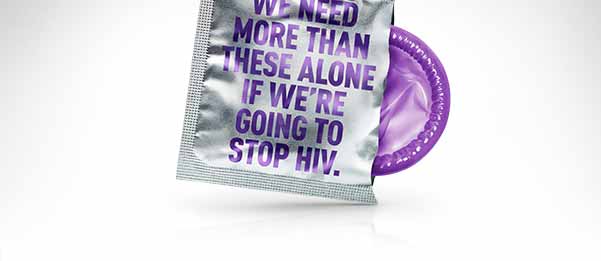
Implement comprehensive HIV prevention in your practice |
|

|
|
| |

|
|

|
|

|
There are
>1.2 million people at substantial risk of HIV infection in the United States1
|
|
Nearly 40,000 new cases of HIV
occur in the
United States each year2
|
|
An ongoing national effort to help reduce HIV infection rates is under way3
|
|
|
| |
| |

|
|
| |
WHAT DO HEALTH AUTHORITIES RECOMMEND? |
|
| |
|
|
| |
| |
The latest federal and global health guidelines (including those from the CDC, ACOG, IAS–USA, and WHO), clinical studies, as well as the National HIV/AIDS Strategy, recognize the importance of a comprehensive prevention approach.3-8
|
|
| |
| |
|
|
| |
A COMPREHENSIVE APPROACH
TO HIV PREVENTION |
|
| |
|
|
| |
| |
The first step in HIV prevention is identifying who is at risk. Start by talking to patients about their sexual health. Ongoing sexual health conversations are an essential component of identifying which of your patients may be at risk of acquiring HIV.2
|
|
| |
| |
|
REGULAR TESTING9
|
|
|
| |
|
Regular testing for STIs and HIV is important for all sexually active individuals, especially those at higher risk for HIV. It is recommended that individuals at risk get tested every 3 to 6 months, depending on their risk factors.
|
|
|
| |
|

|
| |
HIV-INFECTED PATIENTS
| |
| |
Educate about initiating and adhering to treatment, and the importance of condoms to help prevent HIV transmission to uninfected partners.
|
|
| |
| |
HIV-UNINFECTED PATIENTS AT RISK OF INFECTION
|
|
| |
Educate about the importance of condoms, and consider additional prevention methods such as behavioral counseling, PrEP (pre-exposure prophylaxis), and PEP (post-exposure prophylaxis) for appropriate patients.2,8
|
|
| |
|
|
|
| |
|
|
| |
| |
| To learn more about HIV prevention, and to register for updates, visit |

|
| |
|
| |
| |
Thank you for your ongoing commitment to HIV prevention,
|
|
| |
| |
The Gilead HIV Prevention Team
|
|
| |
| |
ACOG=American College of Obstetricians and Gynecologists
CDC=Centers for Disease Control and Prevention
IAS–USA=International Antiviral Society–USA
WHO=World Health Organization
|
|
| |
| |
References: 1. Smith DK, Van Handel M, Wolitski RJ, et al. Vital signs: estimated percentages and numbers of adults with indications for preexposure prophylaxis to prevent HIV acquisition—United States, 2015. MMWR Morb Mortal Wkly Rep. 2015;64(46):1291-1295. 2. Centers for Disease Control and Prevention. Preexposure prophylaxis for the prevention of HIV infection in the United States—2017 update. https://stacks.cdc.gov/view/cdc/48352. Published September 2017. Accessed October 16, 2017. 3. White House Office of National AIDS Policy. National HIV/AIDS Strategy for the United States: updated to 2020. https://files.hiv.gov/s3fs-public/nhas-update.pdf. Published July 2015. Accessed October 4, 2017. 4. The American College of Obstetricians and Gynecologists. Committee on Gynecologic Practice. Preexposure prophylaxis for the prevention of human immunodeficiency virus. Committee Opinion No. 595. Obstet Gynecol. 2014;123:1133-1136. 5. Marrazzo JM, del Rio C, Holtgrave DR, et al. HIV prevention in clinical care settings: 2014 recommendations of the International Antiviral Society–USA panel. JAMA. 2014;312(4):390-409. 6. Günthard HF, Saag MS, Benson CA, et al. Antiretroviral drugs for treatment and prevention of HIV infection in adults: 2016 recommendations of the International Antiviral Society–USA panel. JAMA. 2016;316(2):191-210. 7. World Health Organization. Consolidated guidelines on the use of antiretroviral drugs for treating and preventing HIV infection: recommendations for a public health approach—second edition. http://www.who.int/hiv/pub/arv/arv-2016/en. Published June 2016. Accessed October 5, 2017. 8. Centers for Disease Control and Prevention. Updated guidelines for antiretroviral postexposure prophylaxis after sexual, injection drug use, or other nonoccupational exposure to HIV—United States, 2016. https://www.cdc.gov/hiv/pdf/programresources/cdc-hiv-npep-guidelines.pdf. Published 2016. Accessed October 11, 2017. 9. Centers for Disease Control and Prevention. Testing. https://www.cdc.gov/hiv/basics/testing.html/Should. Published 2016. Accessed October 11, 2017.
|
|
| |
| |
| |
Gilead Website |
Terms of Use |
Privacy Policy |
Contact Us |
Unsubscribe
|
|
| |
| |

|
|
| |
| |
| |
GILEAD, the GILEAD Logo, the Prevention is Reality Logo, and the PreventHIV.com Logo are trademarks of Gilead Sciences, Inc., or its related companies. All other marks referenced herein are the property of their respective owners.
© 2017 Gilead Sciences, Inc.
333 Lakeside Drive, Foster City, CA 94404
All rights reserved. UNB3583 12/17
|
|
| |

